A long-term or weekly rental fits projects that run in stages rather than a single weekend. A kitchen-and-bath remodel in Glenwood, a full estate cleanout in Harborcreek, or a contractor framing a new build in…
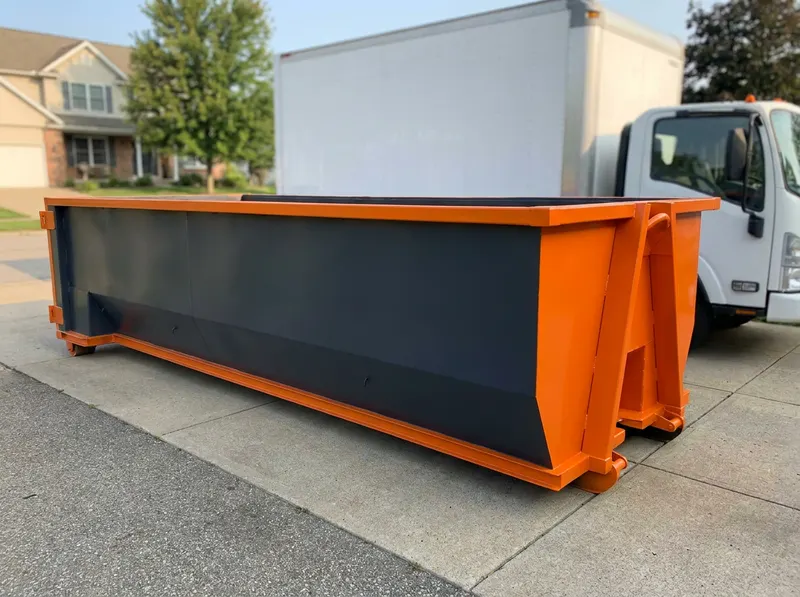
A long-term or weekly rental fits projects that run in stages rather than a single weekend. A kitchen-and-bath remodel in Glenwood, a full estate cleanout in Harborcreek, or a contractor framing a new build in Millcreek all generate debris over several weeks, and hauling a container back and forth each time wastes days. Keeping one dumpster parked on-site means the crew loads it as work progresses and schedules a swap or final pickup when it fills.
Size selection drives the decision more than rental length.
A 10-yard holds roughly 4 pickup-truck loads and suits a single-room gut in a West Bayfront rowhome; a 20-yard holds about 8 loads and handles a whole-floor renovation or a mid-size Little Italy cleanout; a 30-yard and 40-yard carry the bulk volume of a roof tear-off, new construction, or a packed garage-and-basement clearout in Wesleyville. The trade-off is driveway footprint versus how often the container needs emptying, a larger box means fewer swaps and less downtime, while a smaller box fits a tight Bayview or East Bayfront driveway where the City of Erie right-of-way leaves little curb space. If the container sits on a public street rather than private property, a permit from the city may be required, so confirming placement before delivery avoids a stall.
Step 1: call or text a photo and describe the project.
Step 2: our team recommends a size and gives a flat all-in quote, the $595 10-yard price already includes disposal and tonnage, which is the non-obvious part, since a quoted "rental" elsewhere often excludes a per-ton dump fee that balloons the real total. Step 3: the container drops at the agreed spot, typically within 24-48 hours. Step 4: load it over the rental window as the job runs.
Step 5: call for a swap or final pickup when it fills or the work finishes. A dumpster rental is not junk removal, the container is dropped and you load it at your own pace, which is exactly why a longer term works for staged projects.
Weight still matters even with flat pricing. Dense debris like concrete, brick, dirt, and asphalt is far heavier than mixed renovation waste, so heavy clean-fill loads may be matched to a smaller box to stay within road-safe axle limits set under PennDOT hauling rules.
Keeping prohibited items out protects the flat rate: household hazardous waste, tires, and liquids are routed separately, and the Pennsylvania DEP governs how construction and demolition debris is disposed. Recyclable metal and clean wood can often be diverted using options catalogued at Earth911, and refrigerant appliances follow the EPA Section 608 handling standard. Contractors keeping a box on an active site should post it clear of walkways per OSHA 1926 jobsite rules, and anyone renting near Presque Isle State Park or along the Bayfront should account for lake-effect weather that can slow a Lawrence Park or Frontier driveway drop in winter.
Guidance on reducing and managing construction waste is published by the EPA construction and demolition materials program.
Every job gets a firm, written price after an on-site visit.
Tell us about your long-term & weekly rental terms job in Erie and we'll send a clear, written quote, usually the same day.
 Hammerhead Dumpster Rental